Neretva Espresso Machine Review – Real-World Performance & Buying Advice
Navigating the competitive market of affordable home brewing appliances is challenging, especially when attempting to balance visual aesthetics heavily against genuine extraction capabilities.
This independent, comprehensive neretva espresso machine review carefully examines real-world performance metrics across both the 15 and 20 bar hardware variants. By stripping back marketing terminology and testing the core engineering—such as thermoblock stability, pump pressure behavior, and steam wand power—we provide definitive guidance on whether these units belong in your kitchen. Head back to our homepage for a broader look at the entire ecosystem.
We may earn a commission at no extra cost to you.
Check Price on Amazon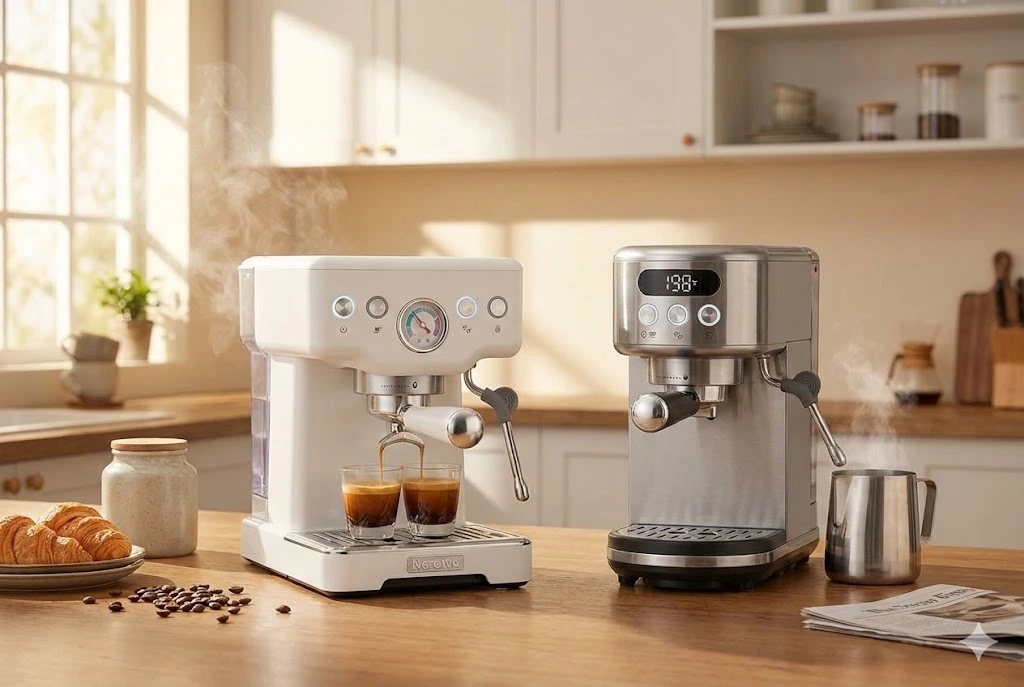
Overview of the Neretva Espresso Machine Lineup
The lineup heavily targets entry-level and intermediate home baristas aiming for a balance of retro styling and functional power without reaching into commercial-grade pricing structures.
- The 15 Bar Setup: An incredibly forgiving entry-level configuration. It excels when paired with standard pre-ground coffee, pushing a softer pressure wave that prevents stalling and makes the morning workflow exceedingly accessible. Read our 15 bar espresso machine breakdown.
- The 20 Bar Alternative: Built specifically to tackle resistance. This variation handles exceptionally fine, precision-ground coffee directly aimed at maximizing deep, complex extractions under more aggressive force. Explore our 20 bar espresso machine deep dive.
Real-World Brewing Performance
Aesthetic value means nothing if the baseline coffee tastes burnt, watery, or metallic. Our real-world analysis focuses strictly on the mechanical efficiency of the components acting together under active load.
Shot Consistency
Initial testing proves that standard shot volumes are highly consistent when dosing the exact same amount of coffee repeatedly. The internal flowmeter successfully measures out water volume logically, preventing large fluctuations in standard programmed extraction times across multiple consecutive 2-ounce double shots.
Crema Quality
The pressurized portafilter basket actively forces the extracted liquid through a secondary pinhole. This intentionally foams the oils, resulting in a thick, artificial crema layer even when utilizing moderately stale, pre-ground supermarket beans. Fresh beans yield a superior, velvet-like consistency reliably.
Pump Pressure Behavior
The Italian-styled vibratory pump generates significant headroom. Instead of struggling aggressively against densely packed coffee pucks, both units quietly accelerate until resistance is met. This translates into smooth pre-infusion-like capillary action across the first few drops before full flow engages.
Thermoblock Heating Stability
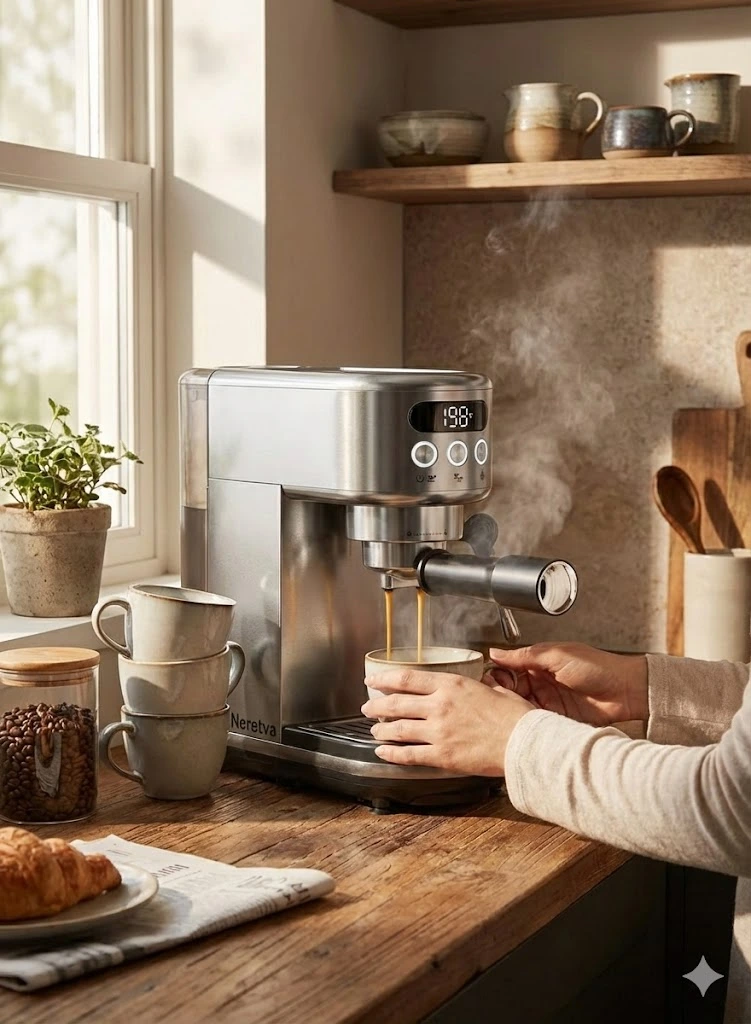
While utilizing a single rapid-heat aluminum thermoblock—as opposed to a heavy brass boiler—the machine remarkably holds 198°F - 202°F extraction temperatures during a 30-second pull. However, pulling more than four shots consecutively reveals slight temperature drops at the tail end of extraction.
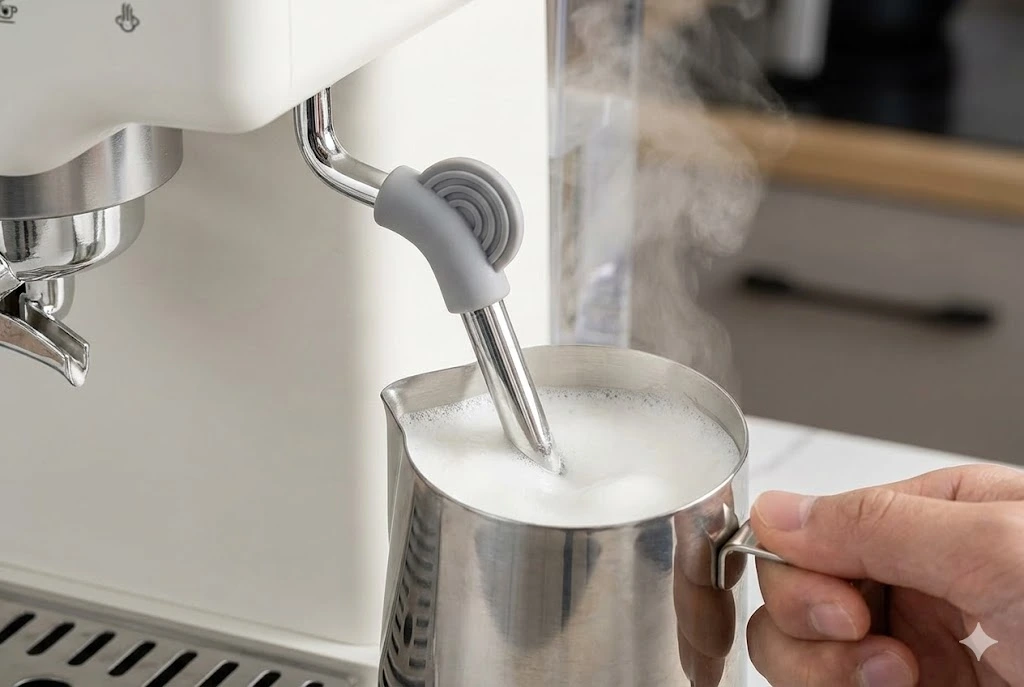
Steam Wand Performance
Operating a single boiler system natively dictates that steam production requires a short waiting period after brewing your shot. Once the thermoblock flashes up to steam temperatures, the manual wand produces dry, forceful steam. While lacking the commercial roll-power required for immediate world-class latte art, it consistently achieves excellent microfoam texturing with milk within 45 to 60 seconds.
Neretva Espresso Machine Pros and Cons
What Works Well
- Exceptional visual aesthetics targeting vintage kitchen design.
- Highly affordable entry vector into real manual setups.
- Extremely fast initial thermoblock heat-up times.
- Compact chassis footprint utilizes minimal counter space.
- Forgiving pressurized baskets accept pre-ground coffee eagerly.
What Needs Improvement
- Heavy reliance on lightweight internal plastic framework.
- Single boiler mandates waiting between brewing and steaming.
- Lightweight chassis requires you to heavily brace the machine when locking the portafilter.
- Included accessories (tamper/scoop) are flimsy plastic.
We may earn a commission at no extra cost to you.
Check Price on Amazon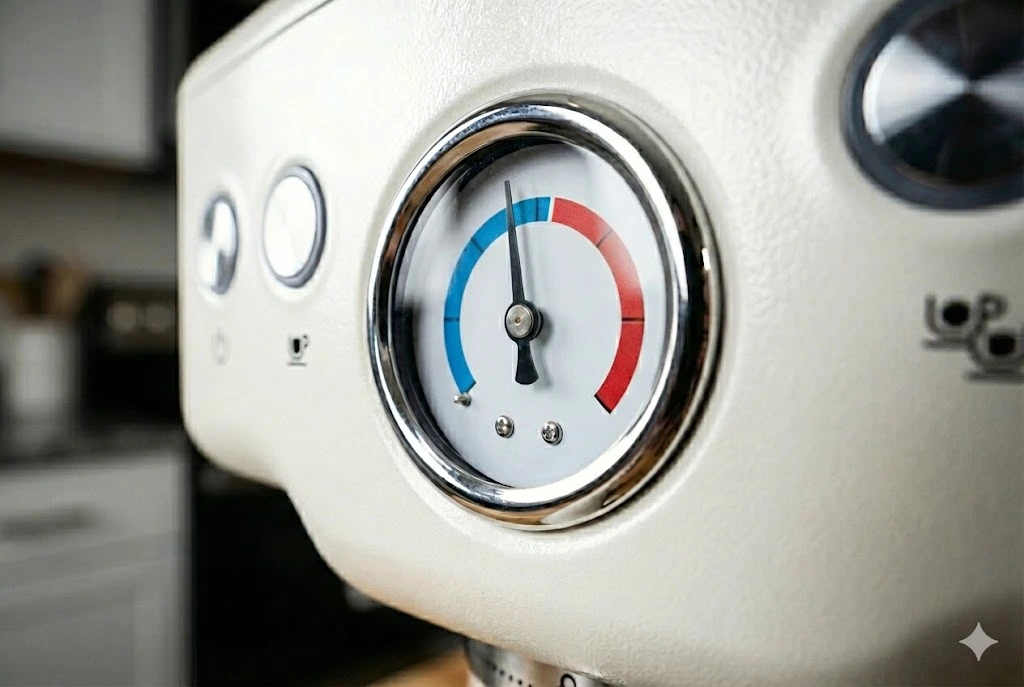
15 Bar vs 20 Bar – Which Should You Choose?
From an absolute engineering standpoint, 9 bars remains the correct pressure limit. However, the higher-rated internal vibratory pumps here offset resistance within a smaller piping network.
Choose the 15 bar model if you plan on routinely purchasing pre-ground grocery store beans, as the flow rate handles uneven particle distribution much safer without choking the group head. Choose the 20 bar model if your setup includes a high-end burr grinder capable of generating powdery espresso mounds, as the additional force extracts heavier body and richer crema from compacted beds.
We may earn a commission at no extra cost to you.
Check Price on AmazonWhat Reddit & Online Discussions Say
Based on public discussion trends compiled across multiple home-barista forums and Reddit threads, several distinct community consensuses have repeatedly emerged regarding the overall experience:
- Beginner Friendliness: Audiences widely praise the affordability, noting that it acts as the perfect trial machine for users uncertain if they want to commit to a multi-step manual workflow every morning.
- Aesthetic Value: A massive portion of digital feedback revolves entirely around the machine's charming retro design seamlessly matching existing pastel kitchen appliances.
- Build Quality Concerns: Several experienced users have highlighted that the machine feels distinctly lightweight, necessitating grasping the main body firmly when tightening down the portafilter to prevent sliding.
- Steam Wand Learning Curves: Beginners frequently mention initial struggles grasping the manual steam wand texturing technique, though acknowledge the machine holds enough pressure to succeed once the angle is mastered.
Common Problems Reported
While generally reliable, the exact same mechanical issues surface routinely among long-term owners that fail to perform preventative maintenance workflows.
- Weak Steam Output: Nearly always directly linked to severe mineral scale blockages inside the thermoblock.
- Water Channeling: An exceptionally thin, watery shot output almost exclusively means the coffee dose was tamped sideways, forcing water to aggressively carve a shortcut hole straight through the puck.
- Drip Tray Overflow: The shallow internal dimensions of the tray fill quickly after steam purges, causing spills if ignored.
For immediate technical remedies, visit our extensive troubleshooting FAQ hub or reference the official digital manual.
Who Should Buy It?
- Strict budget buyers exploring espresso mechanics for the first time.
- Students or apartment renters facing heavily restricted countertop space availability.
- Consumers aggressively prioritizing kitchen styling and retro visual design themes.
Who Should Skip It?
- Hobbyists looking to continuously pull 6+ consecutive milk drinks for dinner party guests.
- Technical purists hunting for massive 58mm commercial portafilters and dual PID temperature control loops.
- Users desiring completely automated, single-button bean-to-cup functionality.
Is the Neretva Espresso Machine Worth It?
When evaluated strictly against similarly priced competitors within its structural tier—such as entry-level DeLonghi or basic Mr. Coffee models—the Neretva espresso machine remains competitive within its price range. The internal mechanics are robust enough to pull hot, completely legitimate espresso shots coated in genuine crema. If you encounter any technical hiccups, we cover common troubleshooting questions within our dedicated help center.
It explicitly is not a high-end commercial powerhouse, and pretending otherwise invites disappointment. However, if your primary goal involves securing a visually stunning, affordable machine to pull your daily morning latte while slowly learning manual mechanics, it remains a reasonable option for its intended audience.
Frequently Asked Questions
Is Neretva a good espresso machine brand?
Yes, Neretva is widely considered a highly capable entry-level espresso machine brand. They focus on delivering functional thermoblock heating and reliable vibratory pumps inside a vintage casing at a budget-friendly price point.
Does it last long?
Like most entry-level appliances utilizing plastic internal components alongside metal boilers, longevity strictly depends on maintenance. With rigid descaling schedules and daily cleaning, users reliably report years of functionality.
Is 20 bar better than 15?
A 20 bar machine provides more brute extraction force, heavily favoring enthusiasts utilizing exceptionally fine grinds. However, the 15 bar model is often preferred for casual users who only brew pre-ground coffee.
Does it make real espresso?
Yes. Since true espresso requires forcing hot water under at least 9 bars of pressure through compacted coffee, both sizes easily accomplish this internally, extracting genuine espresso complete with proper crema.
Is it better than DeLonghi?
DeLonghi offers established long-term support networks and higher commercial build qualities at steeper price tags. Neretva often wins out in immediate value for cost and aesthetic appeal for beginner home baristas.
Is it good for beginners?
Yes. It integrates simple button controls and a straightforward manual steam wand. The pressurized filter baskets also forgive uneven tamp pressures and inconsistent grind sizes common with newer users.
Does it need a grinder?
While you can technically utilize store-bought pre-ground espresso blends with success, securing an independent burr grinder is highly recommended. Freshly ground beans drastically improve the overall flavor extraction and crema depth.
Check Pricing & Support the Project
If you've decided this machine successfully fits your kitchen capabilities, check the current marketplace pricing utilizing the link below to help support our testing platform.
We may earn a commission at no extra cost to you.
Check Price on Amazon